Updated on February 17, 2026
Biometric authentication is a security process that verifies your identity using unique physical traits like your fingerprint, face, iris, or voice. Instead of typing in a password, biometric systems compare your physical or behavioral characteristics against data you previously enrolled to confirm you are who you say you are.
Think about how you've been securing your accounts for years. You've relied on passwords (something you know) or security tokens (something you have). Biometrics changed the game by adding a third option: something you are. Your fingerprint, your face, your voice; these are parts of you that can't be forgotten at home or scribbled on a sticky note.
Thanks to advances in AI and pattern recognition, biometric authentication has evolved far beyond simple fingerprint scanning. Today's systems can verify your identity through dozens of unique physical and behavioral traits.
How does biometric authentication work?
Biometric authentication captures your biological or behavioral data, processes it, and compares it against a stored template. The system needs three things to make this happen:
A sensor or reader that captures your biometric data
Software that converts your data into a digital format
A database that stores your biometric templates for comparison
Here's what happens when you set up biometric authentication. The sensor captures your data—let's say a fingerprint scan. The software processes that scan and converts it into a mathematical template, which gets stored securely in a database.
When you try to log in later, the system captures your fingerprint again, creates a new template, and compares it to the stored version. If they match within an acceptable range, you're in.
Types of biometric authentication
Physical biometrics
Physical biometrics use measurable characteristics of your body to verify who you are.
Fingerprint recognition is everywhere. Your phone, your laptop, even the door to your office building. Your fingerprints are unique to you, making them an excellent identifier. But they're not perfect. If you work with your hands, your fingerprints can wear down over time. Dirty sensors or sweaty fingers can also cause problems with accurate readings.
Facial recognition has exploded in popularity over the past few years, because it's touchless and effortless. Just look at your phone and you're in. The downside is that it's one of the easier biometric methods to fool. Masks, sunglasses, or even significant changes in your appearance can throw off the system. Researchers have also shown that photos or 3D-printed masks can sometimes trick facial recognition systems.
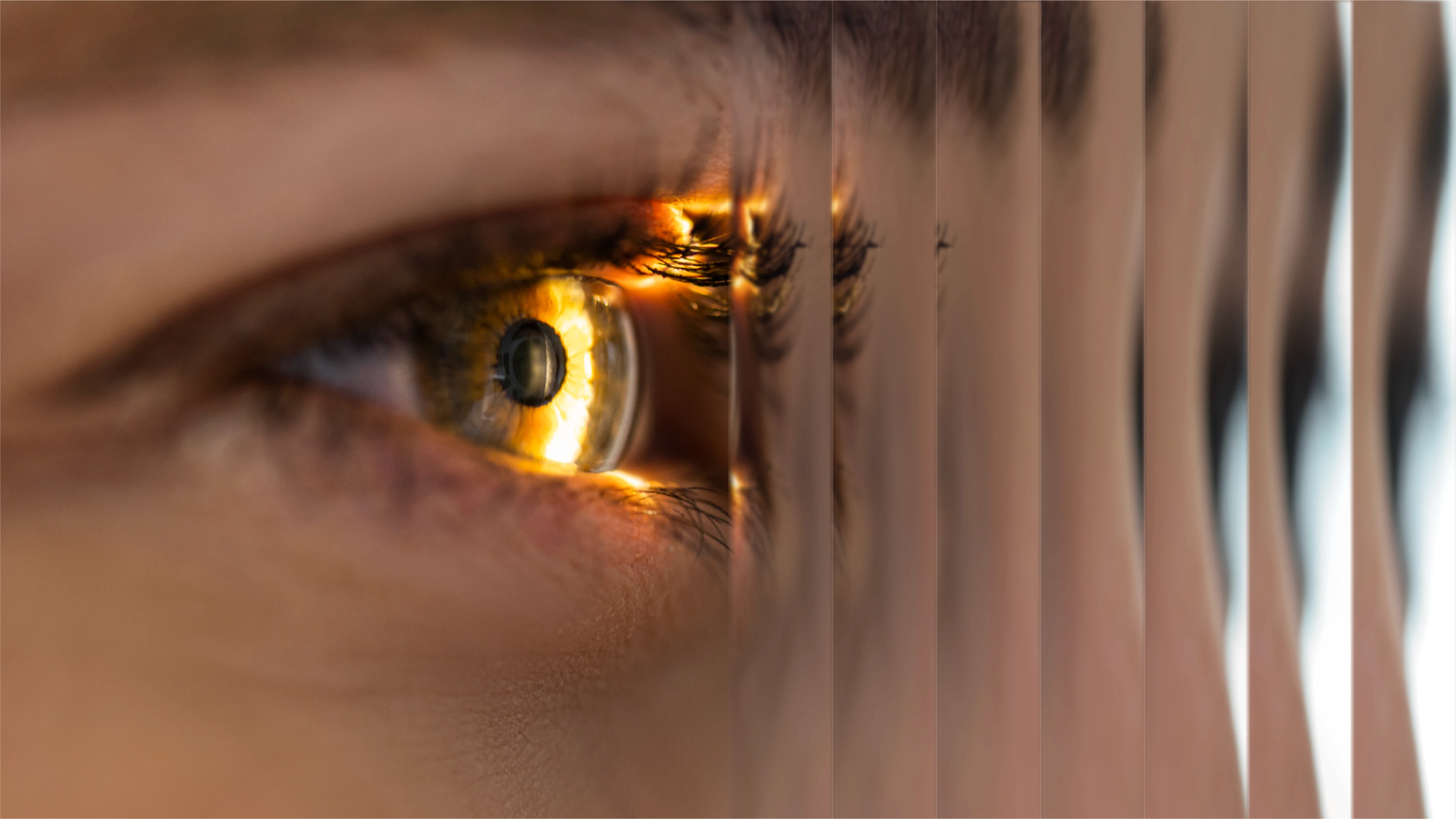
Iris and retina scanning use near-infrared light to map the unique patterns in your eye. These methods are incredibly accurate, which is why you'll find them in high-security environments like government facilities and nuclear research centers. But they require specialized equipment, making them less practical for everyday use.
Voice recognition analyzes the unique characteristics of your voice: pitch, tone, frequency, and speech patterns. AI has made voice recognition much more reliable, which is why banks now use it for call center authentication. It's convenient, but your voice can change when you're sick or tired, potentially causing authentication issues.
Vein recognition maps the pattern of blood vessels beneath your skin using infrared light. Because your vein patterns are internal, they're extremely difficult to replicate or steal, making this one of the most secure biometric methods available.
Behavioral biometrics
Behavioral biometrics verify your identity by analyzing how you interact with devices and systems. You probably don't realize it, but you have unique patterns in the way you type, walk, and even move your mouse.
Common behavioral biometric methods include:
Typing dynamics: Your typing speed, rhythm, and keystroke patterns
Gait analysis: Your walking patterns, stride length, and body movement
Signature analysis: Your pen pressure, signing speed, and stroke order
Mouse and touchscreen dynamics: How you move your cursor, click, scroll, and swipe
Behavioral biometrics open up possibilities for continuous authentication throughout your work session. But there's a privacy trade-off. To make these systems work, organizations need to collect a lot of data about your behavior, which understandably makes some people uncomfortable.
What is multimodal biometric authentication?
Multimodal biometric authentication combines two or more biometric methods to verify your identity. This dramatically increases security because an attacker would need to spoof multiple unique characteristics at the same time—a much harder feat to pull off.
Think about it this way: A system that only checks your face (unimodal) might be fooled by a high-quality photo. But if that same system also requires your voice or fingerprint, suddenly the attack becomes exponentially more difficult.
You'll find multimodal authentication in places where security is paramount: data centers, government facilities, and banking systems. The trade-off is cost. Multiple scanners and storage for different types of biometric data don't come cheap.
Biometric authentication vs. passwords
Biometrics have some clear advantages over passwords. You can't write your fingerprint on a sticky note or accidentally save it in your browser. Biometrics are also much harder to steal, guess, or share with someone else.
But here's the catch: you can't change your biometrics. If someone steals your password, you reset it and move on. If your fingerprint template gets stolen in a data breach, you're stuck. You can't grow a new fingerprint. This is why secure storage of biometric data is absolutely critical.
The smartest approach? Don't put all your eggs in one basket. Combine biometrics with other authentication factors instead of relying on biometrics alone.
Advantages of biometric authentication
Enhanced security: Your biometric traits are unique and extremely difficult to replicate
Improved user experience: Fast, convenient, and no passwords to remember
Reduced fraud: Attackers need your physical presence and sophisticated techniques to compromise your account
Non-transferable credentials: You can't share, lend, or transfer your fingerprint to someone else
Passwordless authentication: Eliminates the costs and security risks of password management
Disadvantages and risks of biometric authentication
Irreversibility: Once compromised, your biometric data can't be changed like a password
Privacy concerns: Many people are uncomfortable handing over intimate physical information about their bodies
Potential for bias: Facial recognition has documented accuracy problems with people of color and women
False rejections: The system might reject you if you're wearing makeup, glasses, or recovering from an injury
Vulnerability to spoofing: Determined attackers can fool systems with fake prints, photos, masks, or recordings
High implementation costs: Quality biometric systems require specialized hardware, software, and infrastructure
Data storage challenges: Organizations take on serious responsibility for protecting your biometric data from breaches
Continuous biometric authentication
Continuous biometric authentication monitors your identity in real-time throughout your entire session, not just when you log in. The system constantly checks behavioral biometrics like your typing patterns and mouse movements to make sure you're still you.
This sounds great for security, but it raises some uncomfortable questions. Do you really want your employer monitoring every keystroke and mouse movement you make all day? Many people and privacy advocates consider this level of surveillance invasive, even if it's done in the name of security.
Legal regulations for biometric authentication
The legal landscape for biometric data varies dramatically depending on where you live and work.
In the United States, there's no federal law governing biometric data collection. Instead, individual states have stepped in. Illinois leads the pack with the Biometric Information Privacy Act (BIPA), passed in 2008. BIPA requires organizations to tell you exactly what biometric data they're collecting and why. More importantly, they need your written consent before collecting anything.
California, Texas, Washington, and other states have similar laws on the books.
If you're in the European Union, the General Data Protection Regulation (GDPR) treats biometric data as a special category requiring extra protection. Organizations need a lawful reason to process your biometric data and must implement strong security measures to protect it.
Limitations of biometric authentication
Biometric authentication isn't the silver bullet many people think it is. Those "immutable" physical traits? They actually change over time. Your fingerprints can wear down if you work with your hands. Your face changes as you age. Your voice sounds different when you're sick.
This means biometric systems need regular updates to stay accurate. A fingerprint you enrolled ten years ago might not match perfectly today, especially if you work in construction or manufacturing.
Biometric systems can also exclude certain groups of people. Workers with damaged fingerprints, people with certain disabilities, or anyone whose physical characteristics don't play well with a particular biometric method can find themselves locked out.
And let's be clear: biometric data can be stolen. It sits in databases just like any other data. Sophisticated attackers have created fake fingerprints, fooled facial recognition with photos and masks, and bypassed voice authentication with recordings.
The bottom line? Use biometrics as one layer in a multi-layered security strategy, not as your only defense.
Use cases for biometric authentication
You'll find biometric authentication almost everywhere these days:
Healthcare: Hospitals use it to identify patients, access medical records, and authenticate staff
Financial services: Banks rely on it for mobile banking apps, ATM access, and payment authorization
Retail and payments: Customers can authorize transactions with their fingerprint or face instead of a PIN
Government and law enforcement: Agencies use fingerprint databases, electronic passports, and border control systems
Manufacturing: Companies control facility access and track employee time and attendance
Education: Schools use it for student identification, attendance tracking, and exam authentication
Consumer technology: Your smartphone, laptop, and smart home devices likely have biometric security built in
Data centers: High-security facilities use it to control physical access to server rooms and network infrastructure
Best practices for implementing biometric authentication
Don't rely solely on biometrics for authentication. Build a comprehensive security strategy that combines biometrics with other authentication factors while respecting user privacy and legal requirements.
Key best practices include:
Implement liveness detection to verify that biometric samples come from a living person, not a photo or recording
Minimize data collection to only what you actually need for your specific use case
Secure biometric data storage using encryption and consider decentralized approaches
Provide transparency and obtain consent before collecting any biometric information
Plan for accessibility by offering alternative authentication options
Regular updates and testing to account for natural changes in physical characteristics
Comply with regulations in every jurisdiction where you operate
The future of biometric authentication
Biometric authentication will keep evolving as a critical piece of modern security. The technology is getting more sophisticated and accurate while costs continue to drop.
Future innovations will likely tackle current limitations head-on. Expect better liveness detection that makes spoofing nearly impossible. Improved algorithms will reduce bias and work more accurately across diverse populations. New biometric modalities we haven't even thought of yet may emerge.
The trend toward passwordless authentication will accelerate, with biometrics playing a starring role. But the smartest implementations will always combine biometrics with other authentication factors rather than treating it as a standalone solution.
The key is finding the right balance: leveraging the security and convenience benefits of biometric authentication while respecting privacy, ensuring accessibility, and keeping realistic expectations about what the technology can and can't do.
Updated on February 17, 2026
Biometric authentication is a security process that verifies your identity using unique physical traits like your fingerprint, face, iris, or voice. Instead of typing in a password, biometric systems compare your physical or behavioral characteristics against data you previously enrolled to confirm you are who you say you are.
Think about how you've been securing your accounts for years. You've relied on passwords (something you know) or security tokens (something you have). Biometrics changed the game by adding a third option: something you are. Your fingerprint, your face, your voice; these are parts of you that can't be forgotten at home or scribbled on a sticky note.
Thanks to advances in AI and pattern recognition, biometric authentication has evolved far beyond simple fingerprint scanning. Today's systems can verify your identity through dozens of unique physical and behavioral traits.
How does biometric authentication work?
Biometric authentication captures your biological or behavioral data, processes it, and compares it against a stored template. The system needs three things to make this happen:
A sensor or reader that captures your biometric data
Software that converts your data into a digital format
A database that stores your biometric templates for comparison
Here's what happens when you set up biometric authentication. The sensor captures your data—let's say a fingerprint scan. The software processes that scan and converts it into a mathematical template, which gets stored securely in a database.
When you try to log in later, the system captures your fingerprint again, creates a new template, and compares it to the stored version. If they match within an acceptable range, you're in.
Types of biometric authentication
Physical biometrics
Physical biometrics use measurable characteristics of your body to verify who you are.
Fingerprint recognition is everywhere. Your phone, your laptop, even the door to your office building. Your fingerprints are unique to you, making them an excellent identifier. But they're not perfect. If you work with your hands, your fingerprints can wear down over time. Dirty sensors or sweaty fingers can also cause problems with accurate readings.
Facial recognition has exploded in popularity over the past few years, because it's touchless and effortless. Just look at your phone and you're in. The downside is that it's one of the easier biometric methods to fool. Masks, sunglasses, or even significant changes in your appearance can throw off the system. Researchers have also shown that photos or 3D-printed masks can sometimes trick facial recognition systems.
Iris and retina scanning use near-infrared light to map the unique patterns in your eye. These methods are incredibly accurate, which is why you'll find them in high-security environments like government facilities and nuclear research centers. But they require specialized equipment, making them less practical for everyday use.
Voice recognition analyzes the unique characteristics of your voice: pitch, tone, frequency, and speech patterns. AI has made voice recognition much more reliable, which is why banks now use it for call center authentication. It's convenient, but your voice can change when you're sick or tired, potentially causing authentication issues.
Vein recognition maps the pattern of blood vessels beneath your skin using infrared light. Because your vein patterns are internal, they're extremely difficult to replicate or steal, making this one of the most secure biometric methods available.
Behavioral biometrics
Behavioral biometrics verify your identity by analyzing how you interact with devices and systems. You probably don't realize it, but you have unique patterns in the way you type, walk, and even move your mouse.
Common behavioral biometric methods include:
Typing dynamics: Your typing speed, rhythm, and keystroke patterns
Gait analysis: Your walking patterns, stride length, and body movement
Signature analysis: Your pen pressure, signing speed, and stroke order
Mouse and touchscreen dynamics: How you move your cursor, click, scroll, and swipe
Behavioral biometrics open up possibilities for continuous authentication throughout your work session. But there's a privacy trade-off. To make these systems work, organizations need to collect a lot of data about your behavior, which understandably makes some people uncomfortable.
What is multimodal biometric authentication?
Multimodal biometric authentication combines two or more biometric methods to verify your identity. This dramatically increases security because an attacker would need to spoof multiple unique characteristics at the same time—a much harder feat to pull off.
Think about it this way: A system that only checks your face (unimodal) might be fooled by a high-quality photo. But if that same system also requires your voice or fingerprint, suddenly the attack becomes exponentially more difficult.
You'll find multimodal authentication in places where security is paramount: data centers, government facilities, and banking systems. The trade-off is cost. Multiple scanners and storage for different types of biometric data don't come cheap.
Biometric authentication vs. passwords
Biometrics have some clear advantages over passwords. You can't write your fingerprint on a sticky note or accidentally save it in your browser. Biometrics are also much harder to steal, guess, or share with someone else.
But here's the catch: you can't change your biometrics. If someone steals your password, you reset it and move on. If your fingerprint template gets stolen in a data breach, you're stuck. You can't grow a new fingerprint. This is why secure storage of biometric data is absolutely critical.
The smartest approach? Don't put all your eggs in one basket. Combine biometrics with other authentication factors instead of relying on biometrics alone.
Advantages of biometric authentication
Enhanced security: Your biometric traits are unique and extremely difficult to replicate
Improved user experience: Fast, convenient, and no passwords to remember
Reduced fraud: Attackers need your physical presence and sophisticated techniques to compromise your account
Non-transferable credentials: You can't share, lend, or transfer your fingerprint to someone else
Passwordless authentication: Eliminates the costs and security risks of password management
Disadvantages and risks of biometric authentication
Irreversibility: Once compromised, your biometric data can't be changed like a password
Privacy concerns: Many people are uncomfortable handing over intimate physical information about their bodies
Potential for bias: Facial recognition has documented accuracy problems with people of color and women
False rejections: The system might reject you if you're wearing makeup, glasses, or recovering from an injury
Vulnerability to spoofing: Determined attackers can fool systems with fake prints, photos, masks, or recordings
High implementation costs: Quality biometric systems require specialized hardware, software, and infrastructure
Data storage challenges: Organizations take on serious responsibility for protecting your biometric data from breaches
Continuous biometric authentication
Continuous biometric authentication monitors your identity in real-time throughout your entire session, not just when you log in. The system constantly checks behavioral biometrics like your typing patterns and mouse movements to make sure you're still you.
This sounds great for security, but it raises some uncomfortable questions. Do you really want your employer monitoring every keystroke and mouse movement you make all day? Many people and privacy advocates consider this level of surveillance invasive, even if it's done in the name of security.
Legal regulations for biometric authentication
The legal landscape for biometric data varies dramatically depending on where you live and work.
In the United States, there's no federal law governing biometric data collection. Instead, individual states have stepped in. Illinois leads the pack with the Biometric Information Privacy Act (BIPA), passed in 2008. BIPA requires organizations to tell you exactly what biometric data they're collecting and why. More importantly, they need your written consent before collecting anything.
California, Texas, Washington, and other states have similar laws on the books.
If you're in the European Union, the General Data Protection Regulation (GDPR) treats biometric data as a special category requiring extra protection. Organizations need a lawful reason to process your biometric data and must implement strong security measures to protect it.
Limitations of biometric authentication
Biometric authentication isn't the silver bullet many people think it is. Those "immutable" physical traits? They actually change over time. Your fingerprints can wear down if you work with your hands. Your face changes as you age. Your voice sounds different when you're sick.
This means biometric systems need regular updates to stay accurate. A fingerprint you enrolled ten years ago might not match perfectly today, especially if you work in construction or manufacturing.
Biometric systems can also exclude certain groups of people. Workers with damaged fingerprints, people with certain disabilities, or anyone whose physical characteristics don't play well with a particular biometric method can find themselves locked out.
And let's be clear: biometric data can be stolen. It sits in databases just like any other data. Sophisticated attackers have created fake fingerprints, fooled facial recognition with photos and masks, and bypassed voice authentication with recordings.
The bottom line? Use biometrics as one layer in a multi-layered security strategy, not as your only defense.
Use cases for biometric authentication
You'll find biometric authentication almost everywhere these days:
Healthcare: Hospitals use it to identify patients, access medical records, and authenticate staff
Financial services: Banks rely on it for mobile banking apps, ATM access, and payment authorization
Retail and payments: Customers can authorize transactions with their fingerprint or face instead of a PIN
Government and law enforcement: Agencies use fingerprint databases, electronic passports, and border control systems
Manufacturing: Companies control facility access and track employee time and attendance
Education: Schools use it for student identification, attendance tracking, and exam authentication
Consumer technology: Your smartphone, laptop, and smart home devices likely have biometric security built in
Data centers: High-security facilities use it to control physical access to server rooms and network infrastructure
Best practices for implementing biometric authentication
Don't rely solely on biometrics for authentication. Build a comprehensive security strategy that combines biometrics with other authentication factors while respecting user privacy and legal requirements.
Key best practices include:
Implement liveness detection to verify that biometric samples come from a living person, not a photo or recording
Minimize data collection to only what you actually need for your specific use case
Secure biometric data storage using encryption and consider decentralized approaches
Provide transparency and obtain consent before collecting any biometric information
Plan for accessibility by offering alternative authentication options
Regular updates and testing to account for natural changes in physical characteristics
Comply with regulations in every jurisdiction where you operate
The future of biometric authentication
Biometric authentication will keep evolving as a critical piece of modern security. The technology is getting more sophisticated and accurate while costs continue to drop.
Future innovations will likely tackle current limitations head-on. Expect better liveness detection that makes spoofing nearly impossible. Improved algorithms will reduce bias and work more accurately across diverse populations. New biometric modalities we haven't even thought of yet may emerge.
The trend toward passwordless authentication will accelerate, with biometrics playing a starring role. But the smartest implementations will always combine biometrics with other authentication factors rather than treating it as a standalone solution.
The key is finding the right balance: leveraging the security and convenience benefits of biometric authentication while respecting privacy, ensuring accessibility, and keeping realistic expectations about what the technology can and can't do.
About the author

Mike Engle
Co-Founder and CSO
Mike is the CSO and a co-founder of 1Kosmos with deep expertise in information security, product development, and business development across Fortune 100 financial institutions and early-stage startups.
The latest in identity security.
Enter our orbit.
The latest in identity security.
Enter our orbit.
The latest in identity security.