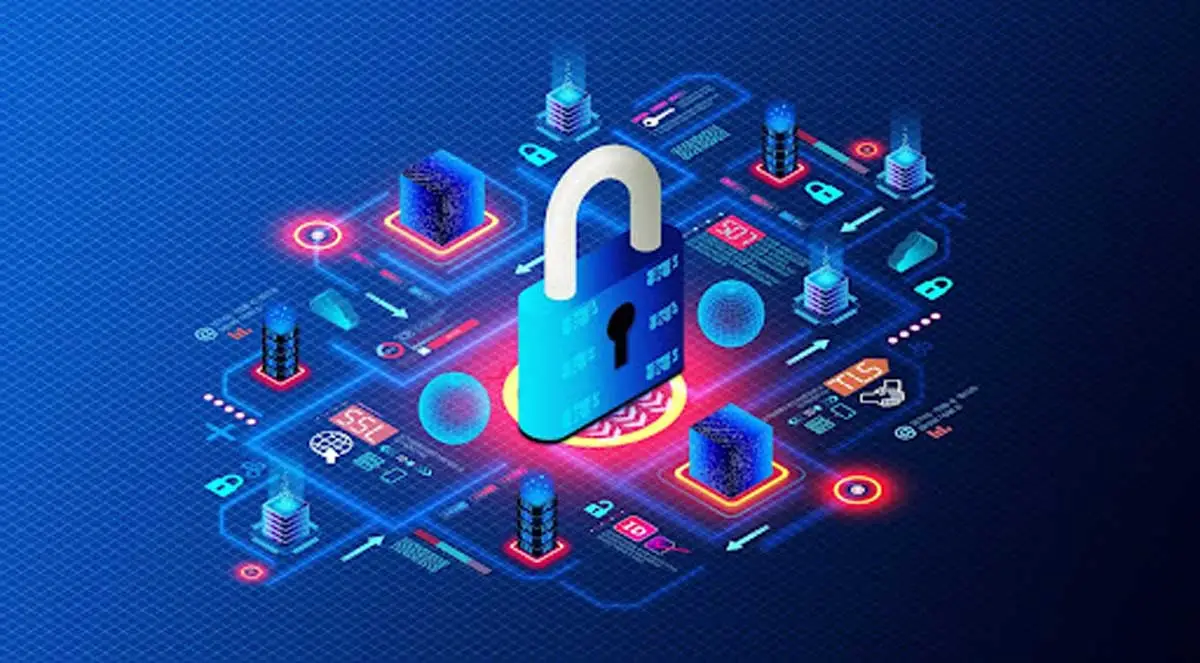
Symmetric encryption (or "private key" encryption) is the process of using a single key to both encrypt and decrypt data. It's called "private key" because the use of a single encryption key necessitates that the key always remains private.
Symmetric encryption is a widely used form of cryptography that provides organizations and users with faster, more readily deployable security for large data sets.
Symmetric encryption is often used for high-volume data processing where speed, efficiency, and complexity are important. However, due to its nature as a single-key solution, it presents several security challenges when it comes to sharing encrypted data. For this reason, symmetric encryption is often combined with asymmetric encryption (which uses different keys for encryption and decryption) in many modern secure communication protocols.
How Does Symmetric Encryption Work?
Encryption works by translating plain text into encoded (cipher) text using an algorithm and a secret key that is, theoretically, computationally infeasible to crack.
The general encryption process works as follows:
Key Generation: A secret key is generated using advanced mathematical equations to encode data. This key is shared between sender and receiver to maintain data obfuscation.
Encryption: The encoding process uses complex algorithms and random environmental data (called "entropy") to transform the original data. This process is typically complex and involves multiple rounds of transformation to ensure the ciphertext is not easily decipherable without the key.
Decryption: Upon receiving the data, the recipient uses the same key to decode it, essentially reversing the process with the key serving as the information needed to "unlock" the data.
Types of Symmetric Encryption Algorithms
Symmetric encryption algorithms typically come in one of two forms:
Stream Ciphers: Encrypt plaintext messages one bit at a time. They create an arbitrarily long keystream of bits, which is then combined with the plaintext bits one by one to produce the ciphertext.
Block Ciphers: Take a chunk, or block, of data and transform it. The algorithm works through the data set block by block. Some block ciphers will repeatedly encrypt blocks for added security.
How Does Symmetric Encryption Compare to Asymmetric Encryption?
As the name implies, symmetric encryption works through symmetry between both ends (encryption and decryption) of the process. Asymmetric encryption is the opposite—it uses a different key for each process.
The biggest challenge in symmetric encryption is the secure distribution of the key. Since the same key is used by all parties involved, it must be shared, which presents its own problems in terms of securing keys.
Conversely, asymmetric encryption doesn't require this kind of sharing. Only one key (the public key) is shared, and it is only used for encoding data and cannot be used to compromise encrypted data.
What Are the Benefits of Symmetric Key Encryption?
The differences between symmetric and asymmetric encryption methods provide context for how symmetric methods benefit users and enterprises.
Key benefits of symmetric encryption include:
Speed: Symmetric algorithms are generally less computationally intensive compared to their asymmetric counterparts, making them faster and perfect for encrypting large amounts of data.
Simplicity: Symmetric encryption involves only one key for both encryption and decryption, which can simplify key management, especially in contexts where key sharing isn't a major concern.
Bandwidth: Data encoded with symmetric algorithms are generally smaller in size, which can help with bandwidth concerns.
It isn't an "all-or-nothing" approach, however. Many systems or algorithms combine both symmetric and asymmetric methods in a single process to leverage the strengths of both.
What Are Use Cases for Symmetric Key Encryption?
Symmetric encryption is suitable when a system needs to perform fast encryption, where there are large amounts of data to encrypt, and where key sharing isn't a concern.
Within those criteria are several use cases where symmetric encryption shines:
File and Disk Encryption: For encrypting files, databases, or entire drives, symmetric methods are the gold standard.
Bulk Data Encryption: In situations where large amounts of data need to be encrypted, symmetric encryption is typically the most practical method due to its speed and efficiency compared to asymmetric encryption.
Hybrid Algorithms: While asymmetric solutions solve some critical security issues, they are inefficient when it comes to encrypting data at scale. Hybrid systems use asymmetric approaches to secure keys and verify user identities while using symmetric algorithms to actually encrypt data.
The most well-known application of a hybrid approach is Secure Socket Layers (SSL), currently renamed and refined as Transport Layer Security (TLS). These technologies are used as a "tunneling" method to create secure and persistent connections between machines. SSL and TLS protocols use combinations of symmetric and asymmetric algorithms to strengthen security.
What Are Different Types of Symmetric Encryption?
There are numerous encryption algorithms available. Some of the more popular symmetric algorithms include:
Advanced Encryption Standard (AES): Currently one of the most widely used symmetric encryption algorithms, supported for national security (by NIST) and industrial applications. There are several different complexities of AES (with 128-bit and 256-bit being the most common) that represent increasing levels of security.
Data Encryption Standard (DES): Primarily used decades ago, this symmetric algorithm has been cracked and is no longer considered secure. It has been deprecated in favor of Triple DES or, in cases of federal or industrial encryption standards, AES.
Triple DES (3DES): An extension of the now-defunct DES algorithm that processes plaintext blocks three times for additional security, with a significant tradeoff in performance.
Blowfish and Twofish: Block ciphers designed as alternatives to DES. Blowfish has a block size of 64 bits, while Twofish has a block size of 128 bits. Twofish was one of the finalists in the competition that selected AES.
Remember, no matter which algorithm or cipher type you use, the security of symmetric encryption relies heavily on keeping the encryption key secret and using a secure method to distribute the key when necessary.
1Kosmos and Encrypted Identity Management
Encryption is a critical part of identity management and authentication. With our private and permissioned blockchain, we leverage symmetric and asymmetric encryption methods to ensure that identity and authentication credentials (including biometrics) remain secure, that users are properly verified, and that decentralized devices can safely access the system.
Key Features
Identity-Based Authentication: We push biometrics and authentication into a "who you are" paradigm. 1Kosmos uses biometrics to identify individuals, not devices, through credential triangulation and identity verification.
Cloud-Native Architecture: Flexible and scalable cloud architecture makes it simple to build applications using our standard API and SDK.
Identity Proofing: 1Kosmos verifies identity anywhere, anytime, and on any device with over 99% accuracy.
Privacy by Design: Embedding privacy into our ecosystem design is a core principle of 1Kosmos. We protect personally identifiable information in a distributed identity architecture, and encrypted data is only accessible by the user.
Private and Permissioned Blockchain: 1Kosmos protects personally identifiable information in a private and permissioned blockchain, encrypts digital identities, and makes them accessible only to the user. The distributed properties ensure no databases to breach or honeypots for hackers to target.
Interoperability: 1Kosmos readily integrates with existing infrastructure through 50+ out-of-the-box integrations or via API/SDK.
SIM Binding: The 1Kosmos application uses SMS verification, identity proofing, and SIM card authentication to create solid, robust, and secure device authentication from any employee's phone.
About the author

1Kosmos
1Kosmos enables remote identity verification and passwordless multi-factor authentication for users to securely transact with digital services.